Thus, as the debt dilemma deepens, the Call for a refocus on Austrian Economics becomes more pressing. The solutions advanced by Mises, Hayek, and Rothbard—those of free markets, sound money, and restrained government intervention—are not relics of a bygone era but beacons that could guide us back to a path of genuine prosperity. Investors and citizens alike should heed these principles, for in their application lies the hope of avoiding the most ruinous outcomes of our current financial trajectory. By embracing these fundamentals, we can work towards a stable and thriving economic future. Click The Button Below To Read More.
The latest moves in the debt market, with sweeping purchases of government bonds, reflect a broader search for security, prompting lower yields on the 10-year Treasury. This trend typically attracts investors toward safer assets during uncertain economic climates. However, the 10-year yield, even after temporary drops, has climbed above 4.5, a significant indicator of a debt market crisis that remains unresolved. To Read The Article Click The Button Below.
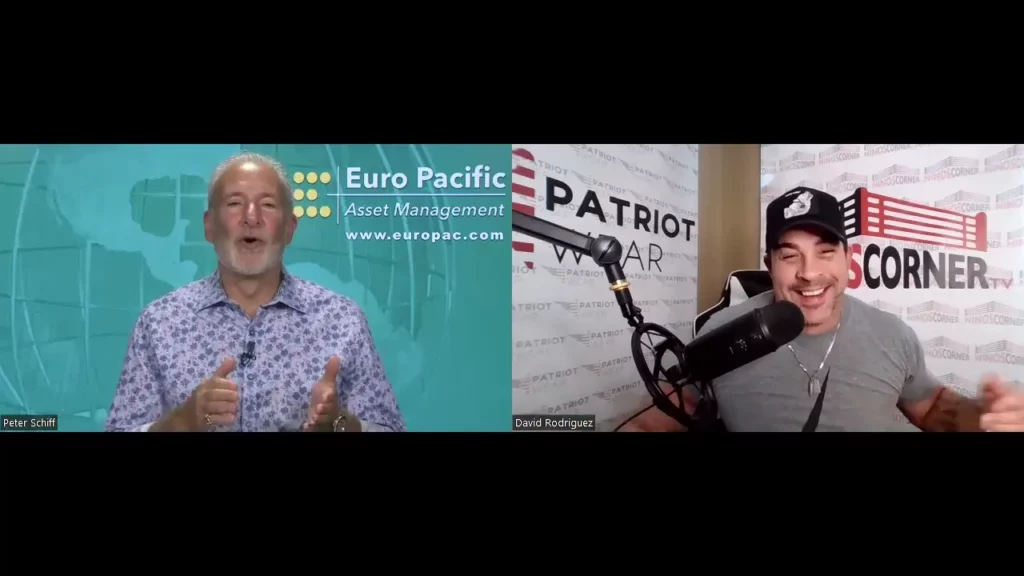
In a recent interview on Nino’s Corner TV, Peter Schiff delves into the concerning state of the economy, highlighting issues such as excessive government spending, over-regulation, and the impact of the welfare state on immigration. He warns of a potential economic crisis fueled by inflation, unsustainable U.S. deficits, and rising interest costs on the national debt. The world’s reliance
In Gregory Manorino’s market report, the focus is on the appointment of Philip Jefferson as the new Federal Reserve Vice Chair. Manorino highlights Jefferson’s wealth and predicts his significant impact on government spending. This appointment is part of a larger strategy by central banks worldwide to inflate economies through debt. The mainstream media’s portrayal of fighting inflation and positive GDPs is misleading, considering the